
Courses
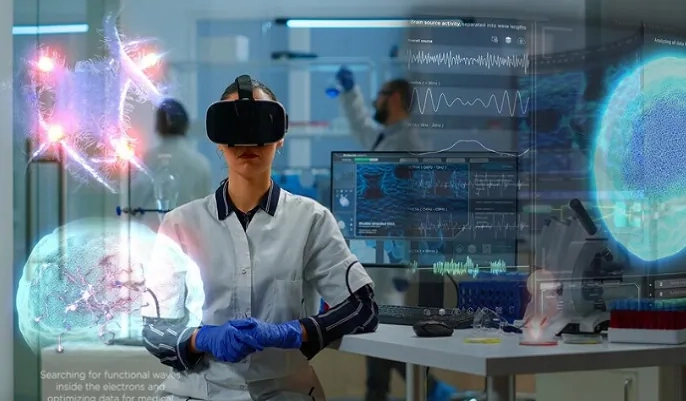
By 2026, AI in healthcare has moved well beyond pilot projects and research trials. What was once experimental is now increasingly integrated into real clinical workflows. Hospitals, clinics, and diagnostic centres are using AI tools to support decision-making, improve accuracy, and reduce pressure on overstretched healthcare systems. This shift marks a genuine turning point in modern medicine.
One of the most impactful areas of adoption is AI medical diagnosis. From analysing medical images and pathology slides to supporting early disease detection and risk prediction, AI is helping clinicians identify conditions faster and more accurately. Rather than replacing professionals, AI is increasingly used as a clinical co-pilot, offering insights that support — not override — human judgement.
Several important changes have shaped this progress since 2024:
These developments come at a critical time. Healthcare systems worldwide face growing strain due to ageing populations, staff shortages, rising costs, and increasing demand for diagnostic services. AI is now seen as part of the solution to improving efficiency without compromising care quality.
This guide is designed for:
Oxford Home Study Centre (OHSC) supports this learning journey through flexible AI in Healthcare pathways designed for non-technical learners.
What Is AI in Healthcare?
In simple terms, AI in healthcare refers to the use of computer systems that can analyse health data, recognise patterns, and support clinical decision-making. In 2026, AI is no longer viewed as a replacement for doctors or nurses. Instead, it acts as a support tool, helping clinicians work more efficiently, consistently, and safely.
It’s helpful to understand that AI in healthcare falls into different categories:
Together, these systems reduce workload while improving accuracy and patient outcomes.
Core AI Technologies Powering Medical Diagnosis
Several key technologies now underpin AI medical diagnosis:
These technologies work together to provide clinicians with timely, evidence-based insights.
Why AI in Healthcare Matters More in 2026
AI’s importance has grown sharply due to several pressures:
AI helps healthcare systems scale safely without compromising care quality.
Enhancing Diagnostic Accuracy
One of the most significant benefits of AI medical diagnosis is its ability to analyse vast and complex datasets at speed. AI systems can process medical images, lab results, clinical histories, and real-time patient data simultaneously — a task that would be extremely time-consuming for humans alone. By identifying subtle patterns and correlations, AI helps clinicians detect conditions earlier and with greater consistency.
AI also plays a key role in reducing human error and diagnostic delays. Fatigue, workload pressure, and information overload can affect clinical judgement. AI tools act as a second set of eyes, flagging anomalies or high-risk cases that may otherwise be missed. Importantly, this is not a competition between AI and clinicians. In 2026, AI and human diagnostic performance are best understood as complementary, with AI supporting — not replacing — expert medical decision-making.
AI in Medical Imaging (Radiology, Pathology, Cardiology)
Medical imaging is one of the most advanced and widely adopted areas of AI in healthcare. AI systems are now routinely used to analyse:
These tools support early disease detection, including cancer, stroke, and cardiovascular disease. Through advanced pattern recognition, AI can identify visual indicators that extend beyond human visual limits, improving diagnostic confidence and speed.
Case Evolution: AI in Radiology (2026 Update)
Since early adoption, AI in radiology has evolved rapidly. Systems have progressed from single-task models to tools capable of multi-condition detection within a single scan. Integration into hospital workflows now allows AI outputs to appear directly in radiology systems, enabling faster triage and prioritisation of critical cases.
What Are Clinical Decision Support Systems?
Clinical Decision Support Systems (CDSS) are digital tools designed to assist healthcare professionals in making informed clinical decisions. In 2026, AI-powered CDSS go beyond simple alerts or checklists by analysing large volumes of patient data in real time. These systems integrate directly into clinical workflows, often within electronic health record (EHR) platforms, providing timely insights at the point of care.
It’s important to distinguish between traditional and modern systems:
This evolution has significantly increased the usefulness of CDSS in modern healthcare.
Supporting (Not Replacing) Clinical Judgment
A key principle of AI in healthcare is support, not substitution. AI-powered CDSS are designed to enhance clinical judgement rather than override it. Common functions include:
Clinicians remain fully responsible for final decisions, using CDSS insights as an additional layer of intelligence.
Benefits of CDSS for Healthcare Providers
The adoption of AI-powered CDSS offers clear advantages:
As healthcare systems face increasing demand, CDSS help clinicians deliver safer, more consistent care.
By 2026, the benefits of AI in medical diagnosis are being felt across healthcare systems worldwide. From improving efficiency to expanding access to care, AI is helping providers deliver higher-quality services under increasing pressure.
Improved Efficiency and Speed
One of the most immediate advantages of AI in healthcare is speed. AI systems can process large volumes of clinical data far faster than manual methods, enabling:
By handling routine analysis and flagging high-risk cases, AI allows clinicians to focus more time on patient care.
Enhanced Patient Experience
AI-driven diagnostics also improve the patient journey. Faster assessments mean shorter waiting times and quicker access to treatment. AI tools support:
These improvements help patients feel more informed, supported, and confident in their care.
Cost Reduction and Resource Optimisation
Healthcare costs continue to rise, making efficiency essential. AI medical diagnosis supports cost control by:
This leads to better use of limited budgets and infrastructure.
Improved Access to Care
AI is also expanding access beyond traditional settings through:
Together, these benefits highlight why AI has become a critical component of modern medical diagnosis.
While the benefits of AI in medical diagnosis are substantial, its adoption also brings important challenges that healthcare systems must address carefully. Understanding these limitations is essential for safe, ethical, and effective use.
Data Privacy and Security
Healthcare data is highly sensitive, making data privacy and security a top concern. AI systems rely on large volumes of patient information, which must be protected at all times. Organisations must ensure:
Strong governance is essential to maintain trust.
Bias and Fairness in AI Diagnosis
AI systems learn from historical data, which may contain bias. If training datasets are not representative, AI diagnosis can reinforce health inequalities. Key concerns include:
Ongoing evaluation helps reduce these risks.
Integration with Existing Healthcare Systems
Many healthcare providers rely on legacy EHR systems, making integration complex. Common challenges include:
Successful adoption requires careful planning and support.
Accountability and Ethical Responsibility
A key ethical question remains: who is responsible for AI-assisted decisions? While AI provides recommendations, legal and professional accountability stays with human clinicians and organisations. This highlights the importance of:
The Ongoing Need for Human Oversight
AI cannot replace clinical empathy, contextual understanding, or moral judgement. In 2026, AI remains a decision-support tool, not a decision-maker. Human oversight ensures patient-centred care and safe outcomes.
As AI in healthcare becomes embedded in everyday clinical practice, regulation and ethics have become central to safe adoption. By 2026, global health authorities, governments, and professional bodies are placing far greater emphasis on ensuring that AI medical diagnosis tools are reliable, transparent, and patient-centred.
Growing Global Focus on AI Regulation
Across regions, regulators are strengthening frameworks to govern healthcare AI. These frameworks aim to ensure that AI systems used in diagnosis meet strict standards for accuracy, safety, and data protection. This global focus reflects growing recognition that diagnostic AI directly influences clinical outcomes and therefore requires robust oversight.
Clinical Safety Standards for AI Tools
In 2026, AI diagnostic systems must meet clearly defined clinical safety standards before being deployed. These standards typically require:
Such safeguards help ensure AI tools support, rather than compromise, patient safety.
Approval and Monitoring of Diagnostic AI Systems
Diagnostic AI tools now undergo formal approval processes similar to other medical technologies. This includes:
Ongoing monitoring is essential as data, populations, and clinical practices evolve.
Importance of Explainable and Auditable AI
Ethical use of AI depends on transparency. Explainable and auditable AI allows clinicians to understand how recommendations are generated and enables organisations to review decisions when needed. This transparency supports accountability, builds trust, and reinforces ethical clinical practice.
As we look beyond 2026, AI in medical diagnosis is expected to become more adaptive, personalised, and deeply integrated into everyday care. Rather than static tools, future AI systems will evolve alongside clinical practice, supporting a shift towards more proactive and patient-centred healthcare.
Continuous Learning and Adaptive AI Systems
Next-generation diagnostic AI systems are designed to learn continuously from new medical data. This includes insights from electronic health records, imaging, and outcomes data. Increasingly, AI tools will also integrate with clinical research and trials, helping translate new evidence into practice more quickly. With appropriate oversight, adaptive AI has the potential to improve accuracy over time while remaining aligned with clinical standards.
Personalised and Preventive Medicine
AI is playing a key role in moving healthcare from generalised treatment to personalised and preventive medicine. By combining genomics, lifestyle data, and medical history, AI systems can support:
This approach supports better outcomes and more efficient care delivery.
AI + Wearables + Remote Monitoring
The integration of AI with wearables and remote monitoring devices is transforming diagnosis. Continuous health tracking enables:
This is particularly valuable for ageing populations and long-term condition management.
Collaborative Human-AI Healthcare Models
The future of healthcare is collaborative. Clinician–AI partnerships will redefine workflows, with AI handling data-heavy tasks while clinicians focus on judgement, empathy, and patient communication. Medical roles will evolve, but human expertise will remain central.
As AI in healthcare becomes part of everyday clinical practice, healthcare professionals in 2026 are expected to develop a new set of practical, non-technical AI skills. These skills focus on using, interpreting, and communicating AI insights safely — not building algorithms.
AI Literacy for Doctors, Nurses, and Allied Health Staff
At a minimum, clinicians now need AI literacy. This means understanding what AI can and cannot do, recognising where it is used in clinical systems, and knowing how to interact with AI-enabled tools confidently. AI literacy helps professionals trust systems appropriately without over-reliance.
Understanding AI-Assisted Diagnostics
Healthcare professionals increasingly work alongside AI-assisted diagnostics, particularly in imaging, risk scoring, and clinical decision support systems. Key competencies include:
This ensures AI supports, rather than replaces, clinical judgement.
Data Interpretation and Ethical Awareness
Modern healthcare generates vast amounts of data. Professionals must be able to interpret AI-driven insights responsibly while maintaining strong ethical awareness. This includes understanding:
Ethical competence is now inseparable from technical understanding.
Communicating AI Insights to Patients
Perhaps one of the most important skills is communication. Clinicians must be able to explain AI-supported findings in clear, patient-friendly language, addressing concerns and maintaining trust. Patients increasingly ask how AI influences their care, making transparent communication essential.
Why AI Education Matters for Healthcare Careers
As AI in healthcare becomes embedded in clinical and operational workflows, professionals with AI awareness are increasingly in demand. In 2026, understanding how AI supports diagnosis, decision-making, and patient care is no longer optional — it’s a key factor in career resilience within a rapidly digitising healthcare environment. AI education helps healthcare professionals adapt to change, work more efficiently, and contribute confidently to AI-enabled care models.
AI in Healthcare Courses at OHSC
Oxford Home Study Centre (OHSC) offers beginner-friendly AI courses designed specifically for non-technical learners. These programmes focus on how AI is applied in real healthcare settings, rather than on coding or complex algorithms.
Key features of OHSC’s AI in healthcare learning pathways include:
This practical approach helps learners understand how AI tools are actually used in modern healthcare environments.
Who These Courses Are For
OHSC’s AI in healthcare courses are suitable for:
Is AI replacing doctors?
No. In 2026, AI in healthcare is designed to support doctors, not replace them. AI tools assist with data analysis, pattern recognition, and administrative tasks, but clinical judgement, empathy, and decision-making remain firmly human responsibilities. AI acts as a clinical co-pilot, helping clinicians work more efficiently and safely.
Can AI diagnose diseases independently?
AI systems can analyse data and flag potential conditions, but they do not operate independently in clinical practice. AI medical diagnosis tools provide recommendations or risk assessments, which must always be reviewed and confirmed by qualified healthcare professionals. Regulatory frameworks require human oversight for all diagnostic decisions.
Is AI safe to use in healthcare?
When properly regulated and implemented, AI can be safe and highly beneficial. In 2026, diagnostic AI tools must meet strict clinical safety standards, undergo regulatory approval, and be continuously monitored. Safety depends on high-quality data, robust testing, transparent algorithms, and responsible use by trained professionals.
How accurate is AI in medical diagnosis?
Accuracy varies by use case, but in areas such as medical imaging, AI can match or even exceed human performance for specific tasks. However, AI works best when combined with human expertise. The most reliable outcomes come from human–AI collaboration, not AI alone.
Do healthcare professionals need AI training?
Yes. As AI becomes more integrated into care delivery, AI literacy is increasingly important for doctors, nurses, and allied health staff. Training helps professionals interpret AI outputs, understand limitations, address ethical concerns, and communicate AI-assisted decisions clearly to patients.
In 2026, AI in medical diagnosis stands at the centre of a major healthcare transformation. From medical imaging and clinical decision support to predictive and preventive care, AI is helping clinicians work faster, more accurately, and more consistently. At a time of growing demand, staff shortages, and rising costs, AI has become a vital tool for strengthening healthcare systems worldwide.
Crucially, AI is not replacing healthcare professionals. Instead, it acts as a support tool, enhancing clinical judgement, reducing cognitive load, and enabling earlier, more informed decisions. The most effective outcomes come from strong human–AI collaboration, where technology supports empathy, experience, and professional responsibility.
Ethical, regulated, and human-centred AI remains essential. Transparent systems, robust governance, and continuous oversight ensure that AI improves care safely while protecting patient trust, privacy, and fairness. As AI capabilities expand, so does the need for healthcare professionals who understand how to use these tools responsibly.
If you want to be part of this next chapter in healthcare, now is the time to act. Explore AI in Healthcare courses at Oxford Home Study Centre (OHSC), build future-ready healthcare skills, and prepare yourself for a digital-first clinical environment.
Be part of the next generation of digital healthcare — start learning today
Our AI Intelligence courses are entirely self-paced, allowing you to study whenever it suits you best. Whether you finish quickly or take your time, there are no deadlines or expiry dates.
No attendance is required. All Artificial Intelligence study materials and assessments are delivered online, enabling full home-study learning without any campus visits.
The course fee displayed on the website includes everything—learning materials, registration, and tutor support. Unless you decide to upgrade your certificate, there are no additional charges.
You’ll be guided by a dedicated tutor who specialises in Artificial Intelligence. They will assist with academic questions, clarify difficult topics, and provide detailed assessment feedback.
Absolutely. Our AI Intelligence courses are open to learners worldwide. As long as you have internet access, you can join from any country.
Our introductory AI Intelligence courses are created specifically for newcomers. They focus on foundational AI concepts before moving into advanced algorithms and applications, making them ideal for first-time learners.
All you’ll need is a laptop or computer with a stable internet connection. Every learning resource, including modules and assessments, is provided digitally—no additional software is required.
Yes. The entire learning journey is completed online, including lessons, reading materials, assignments, and tutor communication. There is no requirement for in-person training.
Upon finishing your chosen programme, you’ll receive an endorsed certificate that can enhance your CV and support your entry into the growing Artificial Intelligence industry.
Completing an AI course can lead to roles such as AI technician, data analyst, machine learning assistant, automation specialist, or support positions within tech-driven companies. Advanced study may open doors to senior AI and machine learning roles.