New Technologies 2026: Emerging Innovations in Education
By 2026, new technologies have moved well beyond experimentation and pilot projects. They are now embedded at the heart of modern education systems, reshaping how learning is designed, delivered, and experienced. What was once considered innovative is now essential infrastructure, supporting students, educators, and institutions in an increasingly digital-first world.
Keeping up to date with new tech technologies is no longer optional. It is critical for:
- Students, who need future-ready skills to remain employable
- Educators, who must adapt teaching methods to new learning environments
- Training providers, delivering relevant, industry-aligned content
- Online colleges, competing in a fast-evolving global education market
Between 2024 and 2026, the education sector has undergone several key shifts. Learning has moved from simple digital delivery to intelligent learning, where AI-driven platforms analyse behaviour, progress, and preferences. At the same time, education has evolved from basic online access to personalised, adaptive education, offering tailored pathways that respond to individual learner needs.
These changes reflect a broader reality: lifelong learning is now essential. Rapid technological change means skills can become outdated quickly, making continuous upskilling a necessity rather than a choice. Learners must be able to access flexible, relevant education throughout their careers.
Institutions such as Oxford Home Study Centre (OHSC) are responding to this shift by focusing on future-ready online education. OHSC offers flexible courses designed to help learners build practical skills aligned with emerging technologies and workplace demands.
2. Why New Tech Technologies Matter More in 2026
2.1 Education in a Rapidly Changing World
In 2026, education exists within a world shaped by constant technological change. Automation and AI are transforming how work is done, redefining job roles, and altering the skills employers value. Many traditional tasks are now automated, while new roles continue to emerge — often requiring digital, analytical, and technology-aware capabilities.
As a result, skill lifecycles are becoming much shorter. What was relevant five years ago may already be outdated. This reality has made constant upskilling essential for both students and professionals. Learning is no longer something that happens once at the start of a career; it must continue throughout working life.
At the same time, there is growing demand for flexible, online learning. Learners need education that fits around work, family, and global time zones. New tech technologies make it possible to deliver high-quality learning without physical classrooms, opening education to a wider and more diverse audience.
2.2 From Traditional Learning to Smart Learning Systems
Alongside these changes, education itself has evolved. The traditional one-size-fits-all model no longer meets modern learner needs. In 2026, learning is increasingly driven by smart learning systems that adapt to individuals rather than forcing everyone through the same pathway.
Key characteristics of this shift include:
- Data-driven, learner-centric models that adjust pace and content
- Personalised feedback based on progress and engagement
- Technology-enabled accessibility for learners with different needs
Technology also plays a vital role in accessibility and inclusion, removing barriers related to location, cost, and learning style. Adaptive platforms, assistive tools, and on-demand content ensure more people can participate in education than ever before.
3. Artificial Intelligence (AI) for Personalised Learning
3.1 How AI Is Transforming Education in 2026
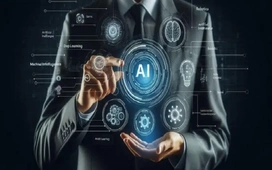
In 2026, artificial intelligence (AI) has become one of the most influential new technologies shaping education. Rather than delivering static content, AI-powered platforms now respond dynamically to how learners engage with material. This has led to the rise of truly personalised learning experiences.
Key developments include:
- Adaptive learning paths that adjust content difficulty based on performance
- Real-time performance analysis, identifying strengths and gaps instantly
- AI tutors and learning assistants that provide guidance, reminders, and explanations on demand
These systems ensure learning feels responsive and relevant, rather than rigid or generic.
3.2 Benefits of AI-Driven Personalisation
One of the biggest advantages of AI in education is its ability to respect individual differences. Learners no longer have to move at the same pace or follow identical routes.
AI-driven personalisation enables:
- Learning at an individual pace, reducing frustration and overload
- Targeted feedback and support exactly when it’s needed
- Reduced dropout rates, as learners feel more supported and engaged
By tailoring the experience, AI helps learners stay motivated and confident — particularly important in online and self-paced education environments.
3.3 AI as a Support Tool, Not a Teacher Replacement
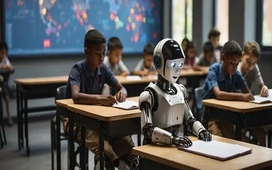
Despite its capabilities, AI is not replacing educators. In 2026, the most effective models rely on human educators working alongside AI. Technology handles data, monitoring, and routine guidance, while teachers focus on critical thinking, mentorship, and emotional support.
Ethical use of AI in education remains essential. This includes transparency, data protection, and ensuring AI enhances — rather than controls — learning outcomes.
4. Immersive Learning with Augmented Reality (AR) and Virtual Reality (VR)
4.1 AR and VR in Modern Education
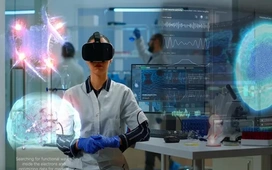
By 2026, Augmented Reality (AR) and Virtual Reality (VR) have moved firmly into mainstream education, becoming two of the most impactful new technologies in learning design. These tools allow learners to step beyond textbooks and videos into interactive, simulated environments that feel real and engaging.
AR and VR are now widely used for:
- Virtual labs where students can conduct experiments safely
- Simulations for technical, medical, and operational training
- Historical reconstructions, allowing learners to explore past events and environments
This approach enables practical, hands-on learning without the limitations of physical classrooms, equipment, or location.
4.2 Benefits of Immersive Learning
The rise of immersive learning has transformed how knowledge is absorbed and retained. Instead of passively consuming information, learners actively participate in experiences that mirror real-world scenarios.
Key benefits include:
- Higher engagement and retention, as learners learn by doing
- Safe environments for practising complex or high-risk tasks
- Improved confidence before entering real-world situations
These advantages make AR and VR particularly valuable in fields such as healthcare, engineering, construction, aviation, and other technical disciplines where mistakes can be costly or dangerous.
4.3 Accessibility and Cost Improvements by 2026
One of the biggest barriers to AR and VR adoption used to be cost. By 2026, this has changed significantly. Devices are more affordable, lightweight, and widely available. Many learning experiences now run through browser-based or mobile AR/VR platforms, removing the need for expensive hardware.
As access improves, immersive learning is no longer limited to elite institutions. It is becoming a practical option for online colleges, training providers, and lifelong learners worldwide.
5. Interactive Virtual Classrooms and Remote Learning Evolution
5.1 The Rise of Smart Virtual Classrooms
By 2026, virtual classrooms have evolved into intelligent, interactive learning environments. Powered by new technologies, these spaces go far beyond basic video calls. Today’s smart virtual classrooms support real-time collaboration, peer interaction, and instructor-led engagement at scale.
Key features now include:
- Live collaboration tools such as shared whiteboards, breakout rooms, and group projects
- AI-assisted moderation and engagement tracking, helping tutors identify disengaged learners and adjust delivery
- Truly global classrooms without borders, connecting learners and educators across countries and time zones
These technologies make online learning more dynamic and inclusive, ensuring learners feel seen, supported, and actively involved rather than passive observers.
5.2 Remote Learning as a Permanent Model
Remote learning is no longer a temporary solution — in 2026, it is a permanent and respected education model. Institutions now design courses specifically for online delivery, rather than adapting classroom content after the fact. This shift reflects changing learner expectations and lifestyles.
Key trends shaping remote learning include:
- Hybrid and fully online education options tailored to different needs
- Increased demand for flexible schedules that fit around work and family
- Growth of microlearning and modular education, allowing learners to study in short, focused blocks
These models support lifelong learning by making education more accessible, affordable, and adaptable.
For online colleges and training providers, embracing these new tech technologies is essential to remain competitive. Providers such as Oxford Home Study Centre (OHSC) continue to refine remote learning experiences using smart platforms and flexible delivery.
6. Blockchain for Secure Educational Records and Credentials
6.1 What Is Blockchain in Education?
In 2026, blockchain has emerged as one of the most practical new technologies supporting trust and transparency in education. At its core, blockchain is a decentralised digital ledger that records information securely and permanently. In an educational context, this means tamper-proof academic records that cannot be altered or falsified.
Blockchain is increasingly used to issue digital certificates and credentials, allowing qualifications, course completions, and achievements to be stored securely online. Once recorded, these credentials can be accessed and shared easily by learners without relying on central institutions to verify them manually.
6.2 Benefits for Students and Employers
Blockchain-based credentials deliver clear advantages for both learners and employers. For students, managing qualifications becomes simpler and more reliable. For employers, verifying skills is faster and more accurate.
Key benefits include:
- Easy verification of qualifications without lengthy background checks
- Reduced fraud, as records cannot be altered or duplicated
- Global recognition of learning achievements, supporting international mobility
This is particularly valuable in a global job market where learners may study online with international providers.
6.3 Blockchain and Lifelong Learning Portfolios
As lifelong learning becomes the norm, blockchain supports the creation of skills-based learning portfolios. Learners can build stackable credentials, combining short courses, certifications, and micro-credentials into a single verified profile.
This approach reflects modern education’s shift away from single degrees towards continuous skill development. Blockchain enables learners to demonstrate real, up-to-date capabilities across their careers.
7. Robotics and Coding Education in 2026
7.1 Why Coding and Robotics Are Core Skills
By 2026, coding and robotics are no longer specialist subjects reserved for technical careers. They have become core components of modern education, reflecting the realities of an increasingly digital and automated world. Digital literacy is now considered a basic requirement, similar to numeracy and communication skills.
Learning to code and understand robotics helps students and professionals:
- Develop logical thinking and problem-solving abilities
- Understand how AI-driven industries operate
- Communicate effectively with technical teams, even in non-technical roles
As automation continues to reshape workplaces, foundational knowledge of coding and robotics prepares learners to adapt rather than be displaced.
7.2 Robotics in Classrooms and Online Learning
Robotics education has expanded rapidly in both physical classrooms and online learning environments. In 2026, learners engage with robotics through simulations, virtual labs, and affordable hardware kits, making hands-on experience more accessible than ever.
Key benefits of robotics education include:
- Hands-on problem solving through real-world challenges
- Improved logical thinking and creativity
- Strong support for STEM education evolution, integrating science, technology, engineering, and maths
Robotics encourages experimentation and resilience, as learners test ideas, encounter failure, and refine solutions. These transferable skills are valuable across many careers, not just engineering.
8. Cloud-Based Collaborative Learning Tools
8.1 Cloud Technology in Education
By 2026, cloud technology has become a foundational part of modern education and one of the most practical new technologies supporting collaboration at scale. Cloud-based platforms allow learners and educators to work together in real time, regardless of location or device.
In education, cloud tools are widely used for:
- Shared documents and projects, enabling group work without version issues
- Real-time feedback and collaboration, with tutors commenting, editing, and guiding instantly
- Centralised storage of learning materials, assignments, and resources
These tools support a more interactive learning experience, where collaboration mirrors real workplace environments rather than isolated study.
8.2 Benefits for Online and Distance Learners
For online and distance learners, cloud-based learning tools have been transformative. Education is no longer tied to physical classrooms or fixed schedules. Instead, learners can engage flexibly while staying connected to peers and tutors.
Key benefits include:
- Learning anytime, anywhere, using laptops, tablets, or mobile devices
- Teamwork across time zones, supporting global classrooms and international collaboration
- Seamless access to resources, with all materials stored securely in the cloud
Cloud platforms also reduce technical barriers. Learners no longer need powerful hardware or specialist software, as most tools run through standard browsers. This improves accessibility and inclusion, especially for learners balancing study with work or family commitments.
From a skills perspective, cloud-based collaboration prepares learners for modern workplaces, where remote teamwork, shared platforms, and digital communication are the norm. Understanding how to work effectively in these environments is now a core employability skill.
As new tech technologies continue to shape education, cloud-based tools ensure learning remains flexible, collaborative, and aligned with real-world professional practices.
9. Gamified Learning Platforms and Engagement Technology
9.1 Gamification in Education
In 2026, gamification has become a powerful engagement tool within education, supported by advances in new technologies and digital learning platforms. Gamified learning uses elements such as points, badges, challenges, and progress tracking to make education more interactive and rewarding.
Rather than replacing academic rigour, gamification adds structure and motivation. Learners can see their progress clearly, set goals, and stay engaged through visual milestones. These features are especially effective in online learning environments, where maintaining motivation can be challenging without face-to-face interaction.
9.2 Learning Through Play and Competition
Learning through play is no longer just for younger students. In 2026, gamified platforms are widely used across all age groups because they encourage active participation.
Key benefits include:
- Improved completion rates, as learners stay motivated
- Increased learner participation through challenges and rewards
- Greater confidence as learners achieve small, measurable wins
Friendly competition, such as leaderboards or team challenges, helps create a sense of community and shared progress — particularly valuable in remote learning settings.
9.3 Gamification in Professional and Adult Learning
Gamification is increasingly popular in professional and adult learning, where time efficiency and engagement are critical. Corporate training programmes use gamified modules to improve knowledge retention and skill application. Similarly, CPD and skill-based education benefit from structured challenges and progress-based learning.
For working professionals, gamification turns learning into an achievable, motivating experience rather than a burden. It supports lifelong learning by making education engaging, measurable, and aligned with real-world goals.
10. Data Analytics and Learning Insights
10.1 Learning Analytics in 2026
By 2026, data analytics has become a central component of modern education and one of the most influential new technologies shaping how learning is measured and improved. Learning analytics tools now track far more than simple course completion. They provide detailed insights into how learners interact with content, where they struggle, and what helps them succeed.
Key capabilities include:
- Tracking learner progress in real time across modules and activities
- Monitoring engagement levels, assessment results, and learning pace
- Identifying strengths and weaknesses at both individual and group level
This data allows learning platforms to move beyond assumptions and base decisions on evidence. For learners, it means more personalised support and clearer feedback on performance.
10.2 Benefits for Educators and Institutions
For educators and training providers, learning analytics offers powerful opportunities to improve quality and outcomes. Instead of waiting until the end of a course to review results, institutions can now respond while learning is still taking place.
Major benefits include:
- Data-driven course improvement, using insights to refine content, structure, and delivery
- Early identification of patterns that indicate confusion or disengagement
- Early intervention for struggling learners, offering targeted support before problems escalate
Analytics also help institutions demonstrate effectiveness, meet quality standards, and align courses with learner needs and industry expectations.
For online colleges and training providers such as Oxford Home Study Centre (OHSC), learning insights support continuous improvement and learner success at scale.
11. Challenges and Ethical Considerations of New Technologies
11.1 Data Privacy and Security
As new technologies become deeply embedded in education, protecting learner data has become a top priority. Modern learning platforms collect large amounts of information, including personal details, performance data, and behavioural insights. Safeguarding this data is essential to maintaining trust and complying with legal requirements.
Educational providers must ensure:
- Secure storage and handling of student data
- Compliance with global data protection regulations, such as GDPR
- Clear policies explaining how data is collected, used, and retained
Transparency and strong cybersecurity practices are critical to preventing misuse or breaches.
11.2 Digital Divide and Accessibility
While technology has expanded access to education, it has also highlighted inequalities. Not all learners have reliable internet access, suitable devices, or digital skills. In 2026, addressing the digital divide remains an important challenge.
Key considerations include:
- Ensuring inclusive access to technology for all learners
- Designing platforms that work on low-bandwidth connections
- Supporting learners who lack resources or technical confidence
Bridging gaps in connectivity and access is essential to making education fair and inclusive.
11.3 Ethical Use of AI and Automation
The rise of AI-driven education raises important ethical questions. Learning algorithms influence what content learners see and how they are assessed. Ensuring transparency in learning algorithms helps prevent unfair outcomes.
Educators and institutions must also avoid bias and over-automation. AI should support human judgement, not replace it. Ethical use means balancing efficiency with fairness, accountability, and learner well-being.
12. Skills Learners Need in a Technology-Driven Education System
In 2026, success in education is no longer defined solely by subject knowledge. As new technologies reshape how learning is delivered and assessed, learners must develop a broader set of transferable skills to thrive in a technology-driven environment.
At the foundation is digital literacy. Learners need to feel confident using online platforms, learning tools, and digital resources. This includes understanding how technology supports learning, not just how to access it.
Critical thinking is equally important. With vast amounts of information available, learners must be able to question sources, interpret data, and make informed decisions. Technology can provide answers, but human judgement is essential for evaluating them.
Modern education also demands adaptability and continuous learning. Skills can become outdated quickly, so learners must be comfortable updating their knowledge and learning new tools throughout their careers. Lifelong learning is now a necessity rather than a choice.
Strong collaboration and communication skills are vital in virtual and hybrid learning environments. Cloud-based platforms and global classrooms require learners to work effectively with others across locations and cultures.
Finally, learners need ethical awareness of technology. Understanding data privacy, responsible AI use, and the social impact of technology helps ensure learning is both effective and responsible.
By developing these skills, learners are better prepared not only for education in 2026, but for long-term success in an increasingly digital world.
13. How OHSC Adapts to New Technologies in Education
13.1 OHSC’s Approach to Future-Ready Learning
In 2026, education providers must do more than move courses online — they must design learning experiences that reflect how people live and work today. Oxford Home Study Centre (OHSC) has adapted to this reality by focusing on future-ready learning that is flexible, practical, and accessible to learners worldwide.
OHSC’s approach is built around:
- Flexible, online course delivery that allows learners to study anytime, anywhere
- A strong focus on industry-aligned skills, ensuring courses remain relevant to modern workplaces
- Beginner-friendly learning pathways, making education accessible even to those with no prior experience
This model supports lifelong learning and helps learners upskill or reskill without disrupting existing commitments.
13.2 Technology-Enabled Learning at OHSC
Technology plays a central role in how OHSC delivers education. By embracing new technologies, OHSC ensures learners benefit from modern, efficient, and engaging study experiences.
Key features include:
- AI-supported learning models that guide progress and reinforce understanding
- Cloud-based access to learning materials, enabling seamless study across devices
- Digital certificates and career-focused outcomes, helping learners demonstrate skills to employers
These tools support personalised learning while maintaining simplicity and ease of use. Importantly, technology at OHSC is designed to support learners — not overwhelm them.
14. The Future of Education Beyond 2026
Looking beyond 2026, education is set to become smarter, more connected, and increasingly learner-focused. Advances in new technologies will continue to shape personalised learning ecosystems, where education adapts in real time to individual needs, goals, and career pathways. Instead of static courses, learners will engage with dynamic systems that adjust content, pace, and support based on progress and performance.
One of the most significant shifts is the recognition of education as a lifelong journey. Degrees and one-time qualifications are no longer enough in a fast-changing world. Future education models will support continuous upskilling through short courses, micro-credentials, and modular learning that can be updated as industries evolve. Learning will be embedded throughout working life, not confined to early career stages.
Technology will also enable deeper global collaboration. Cloud platforms, virtual classrooms, and collaborative tools will connect learners, educators, and institutions across borders. This global approach allows students to learn from diverse perspectives, share knowledge internationally, and prepare for increasingly globalised careers.
Despite rapid technological progress, the future of education will remain human-centred. AI, data analytics, and automation will support learning, but human values — creativity, ethics, empathy, and critical thinking — will remain central. The most effective education systems will balance innovation with human guidance, ensuring technology enhances learning without replacing meaningful human interaction.
For learners and institutions alike, the message is clear: embracing tech-enabled education thoughtfully and responsibly is key to long-term success. Those who adapt early will be best positioned to thrive in the evolving education landscape beyond 2026.
15. Conclusion:
By 2026, new technologies have transformed education in ways that go far beyond convenience or access. From artificial intelligence and immersive AR/VR learning to blockchain credentials, cloud-based collaboration, and data-driven insights, technology now shapes how learning is personalised, delivered, and measured. These new tech technologies have turned education into a smarter, more flexible, and more inclusive experience for learners around the world.
However, technology alone is not the solution. The most successful education models recognise the importance of adaptability — for both students and educators. Learners must develop digital confidence, critical thinking, and a commitment to continuous learning, while educators must embrace new tools without losing the human connection that supports understanding and motivation.
Crucially, technology should be seen as an enabler, not a replacement. AI and automation support learning, but human guidance, creativity, ethics, and empathy remain central to meaningful education. When used responsibly, technology enhances opportunity rather than diminishing it.
Ready to take the next step?
- Explore online courses designed for modern learners
- Build future-ready skills for a technology-driven world
- Embrace lifelong learning with confidence
Discover flexible, future-focused education with Oxford Home Study Centre (OHSC)