
Courses
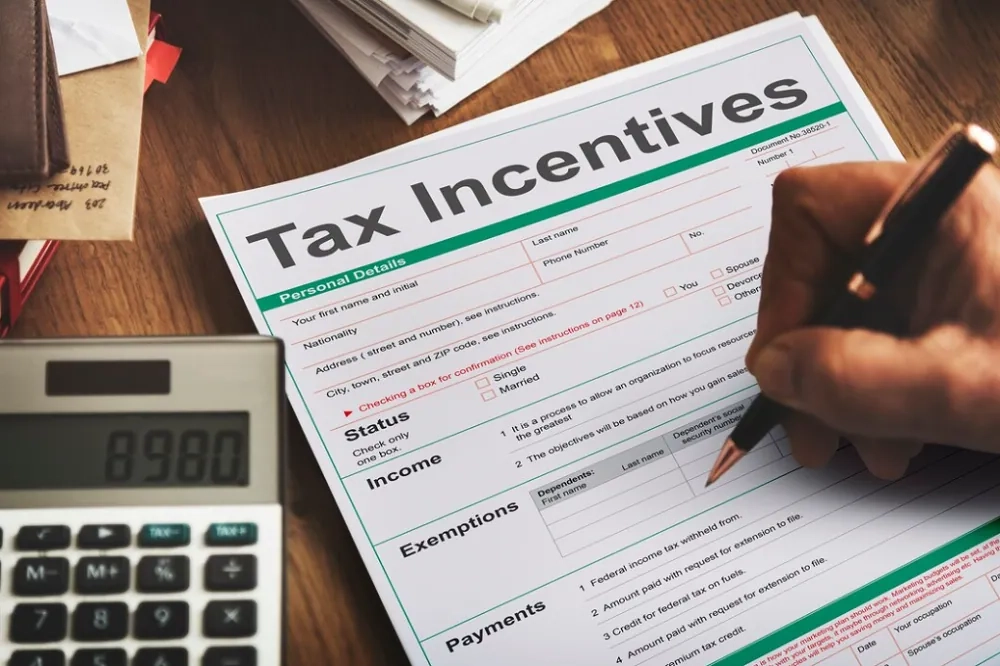
Understanding your taxes is important for managing your money well. In the UK, one tool that helps a lot with this is called the Income Tax Personal Account. This simple guide will help you learn all about it, so you can handle your taxes easily and well.
Think of the Income Tax Personal Account as your helper for money stuff. It's like having a friend who makes dealing with taxes simple. You can use it to see how much tax you owe, update your info, and pay your taxes without any hassle.
Imagine not having to wait in long lines at the tax office or search through lots of papers. With your personal income tax account, you can do everything online, right from where you are. It's super easy – just a few clicks and you're sorted.
But it's not just easy – it's also helpful. Your Personal Tax Account has lots of features to make your life easier. No matter if you work for yourself, own a small business, or have a regular job, this account is designed to fit your needs and make managing your money simpler.
In this guide, we'll explore all the great things your Tax Personal Account can do for you. By the end, you'll feel confident and in control of your taxes. So, let's get started on this journey to financial success with your Personal Tax Account as your trusty sidekick!
At its core, the Personal Tax Account serves as your digital gateway to HM Revenue & Customs (HMRC), the UK's tax authority. It's a secure online platform designed to help you manage your tax responsibilities conveniently and accurately. From checking your tax records to updating personal details, this account is your one-stop destination for all things tax-related.
Accessing your Personal Account is easier than ever before. Simply visit the HMRC website and log in using your credentials. If you haven't already set up an account, don't worry – it's simple.You just need to provide some basic info about yourself and go through a few safety checks. Once you're logged in, you can use lots of helpful services for your taxes right away.
Within your personal tax account, you'll find abundance of features designed to streamline your tax management experience. From viewing and updating your personal information to checking tax estimates and managing payments, the platform offers unparalleled convenience. Need to track your tax refunds or review your tax codes? It's all possible with just a few clicks.
Gone are the days of queuing at the tax office to make payments. With your Personal Tax Account, managing tax payments is as simple as choosing your preferred method – whether it's setting up a Direct Debit, making online transfers, or utilising the Pay As You Earn (PAYE) system. Stay on top of your tax liabilities effortlessly and avoid unnecessary penalties.
Tax codes may seem like cryptic symbols at first glance, but fear not – your personal tax account provides clarity on this front. Learn how tax codes are calculated and stay informed about any adjustments that may affect your tax status. Whether it's changes in income or allowances, your account keeps you in the loop every step of the way.
Your Personal Tax Account is like a helpful tool for people who get tax credits and benefits. It keeps all the important information about what you can get. Whether it's things like Working Tax Credit, Child Benefit, or other money help, your account has it all.
It's important to know what you're supposed to get. If anything changes in your life, like starting a new job or having a baby, make sure to tell HMRC quickly. This makes sure you get the right amount of money and don't get too much by mistake. Keeping your details correct in your Personal Tax Account means you'll get the help you need without any problems.
Keeping your information safe is important when it comes to online accounts, and your personal tax account is no different. You can feel confident knowing that HMRC takes strong steps to keep your private details safe. They have strict rules and systems in place to protect your sensitive information from being accessed by anyone who shouldn't.
But it's not just up to them – you play a part too! It's essential to take care of your account by using good password habits. This means choosing a strong password that's hard for others to guess and not sharing it with anyone else. It's also important to stay alert for any signs of possible threats, like suspicious emails or messages asking for your account details.
By working together with HMRC and taking simple steps to keep your account secure, you can have peace of mind knowing that your information is safe from harm.
If you're interested in exploring more about handling your own finances, consider enrolling in our online CPD course titled "Personal Income Tax Account: Managing Your Finances." This course offers comprehensive insights into using your Income Tax Personal Account to optimize your financial management strategies and ensure tax compliance.
In conclusion, your Income Tax Personal Account is a powerful tool for managing your tax affairs efficiently and effectively. By familiarizing yourself with its features and functions, you can take control of your finances with confidence. Remember, tax compliance doesn't have to be daunting – with the right tools and resources at your disposal, you're well-equipped to navigate the intricacies of the UK tax system. Unlock the full potential of your personal tax account today!
VAT is a tax on many goods and services. In England it operates within the UK VAT framework, with rules governing registration, charging VAT, reclaiming eligible input tax and submitting returns.
VAT is generally a UK-wide tax. Some cross-border and Northern Ireland arrangements need particular attention, so a business should check the rules that apply to its actual transactions.
The six modules address introductory VAT concepts, registration and deregistration, compliance and records, input and output VAT, VAT accounting and reporting, and HMRC inspections.
Yes. The live course page describes online, self-paced study, allowing learners to organise study around their existing commitments.
The published course listing indicates 450 hours of study. Actual completion time will depend on your pace and circumstances.
No. The course is a paid programme. The displayed price may include a time-limited promotion, so check the current enrolment price before purchasing.
It may suit aspiring accountants, finance staff, tax-related administrators, business owners, entrepreneurs and anyone seeking more structured understanding of VAT responsibilities.
The syllabus begins with an introduction to VAT, but you should review the current course requirements and suitability information before enrolling.
VAT registration is the process through which an eligible business joins the VAT register and takes on the relevant responsibilities for charging, recording and reporting VAT.
Output VAT usually refers to VAT charged on taxable sales. Input VAT is VAT incurred on purchases; recovery depends on the applicable conditions and evidence.
The record-keeping module explores VAT compliance and digital records. For software obligations and detailed legal requirements, consult current HMRC guidance.
Yes. The VAT Accounting and Reporting module explores how financial records support return preparation and the checking of reported information.
Yes. The final module introduces VAT inspections and investigations, emphasising record organisation, evidence and effective responses to enquiries.
The live page indicates completion certification and describes the course as CPD-related. Check current terms for certificate type, format, any charges and completion conditions.
No such professional authorisation is established by the course information. Specialist advisory work may call for additional qualifications, experience and professional obligations.
A debit is an entry on the left of an account. Its effect depends on the account type, so it should not automatically be interpreted as an increase or as money received.
A credit is an entry on the right of an account. It normally increases income, liability and equity accounts, while reducing asset and expense accounts.
Yes. Enrolment and the online learning materials are free. Optional certificates are separate purchases after successful completion.
The published course information lists Level 1. This describes the course listing and should not be treated as proof that it is an Ofqual-regulated qualification.
The course lists 20 hours of study. It is self-paced, so the calendar time will depend on your availability and progress.
No formal entry requirement is listed; the course is open to all. Its introductory scope may suit learners beginning the subject or revisiting basic principles.
The five topics cover understanding debits and credits, working with them, identifying relevant data, reading annual reports and identifying high and low risk companies.
Yes. Reading Annual Reports is the fourth topic. It introduces the context in which company financial information is presented.
The risk topic provides introductory educational understanding. It does not establish that an investment is safe, predict company performance or replace professional investment advice.
Follow the course instructions, complete the assignments and achieve the required marks. Refer to the supplied assessment guidance for the applicable format and requirements.
No. Certification is optional and paid separately. You may purchase a QLS-endorsed Certificate of Achievement, a CPD-accredited certificate, or both after successful completion.
It provides introductory subject learning. Completion does not itself confer professional accountancy status; professional routes may require separate qualifications and experience.
It is the name of our online CPD course. The programme has five modules covering double-entry principles, ledgers, debits and credits, financial statements and advanced bookkeeping topics; it is not presented here as a separately sold textbook.
It is a method in which each transaction affects at least two accounts and total debits equal total credits. It provides a connected record of changes in the business’s financial position.
People sometimes use this phrase for double-entry bookkeeping. The course uses the established accounting method of recording balanced debit and credit entries.
There are five modules, beginning with an introduction to double-entry bookkeeping and progressing through account organisation, debits and credits, financial statements and period-end adjustments.
Yes. The programme is online and self-paced, allowing you to organise study around your other commitments.
The course lists 450 recommended study hours. Your calendar time will depend on your study routine and how much time you need to understand and complete the work.
No. Their effect depends on the account type. For example, a debit normally increases an asset account, while a credit normally increases a liability account. Understanding account classifications is essential.
No. Equal totals confirm agreement between debit and credit balances, but some errors remain undetected. An omitted transaction, for instance, may not disturb that agreement.
Yes. The final module covers accrual accounting, adjusting entries and closing entries, connecting daily transaction records with period-end reporting.
No. This is a paid course. Check the current enrolment price before applying; both included PDF certificates are covered by the course fee after successful completion.
After successful completion, we provide a QLS-endorsed certificate and a CPD-accredited certificate in PDF format. No separate payment is required for either included digital certificate.
Course completion records your study of the programme. It does not itself grant a professional accountancy designation. Professional routes may involve separate qualifications, examinations and experience requirements.
The five modules address international compliance foundations, tax residency and treaties, reporting foreign income and assets, transfer pricing and CFC rules, and emerging issues such as digital taxation and BEPS.
Residency is an important part of establishing which tax rules need to be considered. The course explores it alongside double taxation treaties rather than assuming that nationality or payment location alone settles a tax question.
No. Treaty treatment depends on the relevant agreement and circumstances. A treaty should not be assumed to remove every tax or information-reporting obligation.
FATCA stands for the Foreign Account Tax Compliance Act, a US framework concerning foreign financial account and asset reporting. The course includes it within the reporting module.
CRS stands for the Common Reporting Standard. The OECD framework supports the automatic exchange of financial account information between participating jurisdictions.
No. They are distinct frameworks. Their scope and applicable requirements need to be checked separately using current official guidance.
Yes. Both are covered in Module 4, which focuses on these areas of international corporate compliance.
Yes. The final module includes digital taxation, BEPS initiatives and practices for managing compliance risks.
Yes. The programme is online and self-paced, with 450 recommended study hours. Your calendar time depends on your availability and progress.
The published course listing includes tutor support and online assessments. Follow the supplied course instructions for the applicable arrangements and requirements.
After successful completion, we provide a QLS-endorsed certificate and a CPD-accredited certificate in PDF format. Both included digital certificates are covered by the course price.
No. The programme provides subject learning rather than personalised tax advice. Use current official rules and appropriately qualified advice when determining obligations for an individual or organisation.
Yes. The course listing presents study access and materials as free. Optional certificates have separate charges.
The course focuses on AI-assisted financial analysis, including data preparation, forecasting and trend analysis, rather than a comprehensive traditional financial accounting syllabus.
There are three modules, covering AI in financial analysis, data collection and pre-processing, and financial forecasting and trend analysis.
The current listing states that entry is open to all. Some familiarity with basic financial concepts may help you follow the examples.
The current course listing specifies 200 recommended study hours. The time you take will depend on your study pace.
Yes. The course is listed as online and self-paced, with ongoing enrolment.
No. Study access is free, while the listed QLS-endorsed and CPD certificate options carry separate charges.
No. This is an educational course on AI applications in financial analysis; it does not confer professional registration, regulated status or authority to provide financial advice.
It explains cash movements during a reporting period, commonly organised into operating, investing and financing activities. This helps readers understand where cash came from and how it was used.
Profit reflects income and expenses recognised for a period. Cash flow follows cash movements. Differences in timing and the nature of transactions mean the two measures may differ.
The five modules cover an introduction to cash flow statements, operating cash flow, investing cash flow, financing cash flow, and analysis and interpretation.
It concerns cash movements linked to the organisation’s core business activities. The second module examines its components and calculation.
It concerns activities such as acquiring or disposing of assets and investments. The investing module considers these movements and their place in the statement.
It concerns funding and related activities, including debt and equity financing, dividends and share repurchases. These are covered in the fourth module.
No. The source matters. Cash may increase through borrowing or asset sales, so the overall total should be considered alongside its components and wider business information.
Yes. The programme is online and self-paced, allowing you to organise learning around work and other commitments.
The course lists 450 recommended study hours. Your calendar time will depend on your study routine and progress.
The published course listing includes tutor support and online assessments. Use the instructions supplied with the programme for the applicable arrangements and requirements.
Yes. After successful completion, we provide a QLS-endorsed certificate and a CPD-accredited certificate in PDF format. Both included digital certificates are covered by the course price.
It concerns protecting connected systems and the information they carry through measures such as risk assessment, protective technologies, monitoring, access control and secure design.
The five modules cover network-security fundamentals, protocols and technologies, management and monitoring, secure design and architecture, and emerging trends.
Yes. Threat modelling and risk assessment are included in the first module, providing context for the protective measures explored later.
Yes. Encryption is included in the module on protocols and technologies, alongside intrusion detection systems.
No. Intrusion detection supports the identification of activity that needs attention. Detection findings require interpretation, and protection depends on wider security arrangements.
Yes. The management and monitoring module includes vulnerability assessment and incident response, connecting the identification of concerns with the response process.
Segmentation separates areas of a network. Access control governs permitted use of resources. Both are included in the module on secure network design and architecture.
Yes. The programme is delivered online and is self-paced, allowing you to organise learning around your other commitments.
The course lists 450 recommended study hours. The calendar time will depend on your availability and progress.
The published listing states no particular entry requirements. Review the module coverage to assess whether the programme matches your current knowledge and intended study goals.
Yes. A QLS-endorsed certificate and a CPD-accredited certificate in PDF format are included after successful completion, with no separate payment for either included digital certificate.
The included CPD and QLS certificates record completion of this programme. They should not be presented as a separate vendor or industry examination award, a professional designation or an Ofqual-regulated qualification.
It explains cash movements during a reporting period, commonly organised into operating, investing and financing activities. This helps readers understand where cash came from and how it was used.
Profit reflects income and expenses recognised for a period. Cash flow follows cash movements. Differences in timing and the nature of transactions mean the two measures may differ.
The five modules cover an introduction to cash flow statements, operating cash flow, investing cash flow, financing cash flow, and analysis and interpretation.
It concerns cash movements linked to the organisation’s core business activities. The second module examines its components and calculation.
It concerns activities such as acquiring or disposing of assets and investments. The investing module considers these movements and their place in the statement.
It concerns funding and related activities, including debt and equity financing, dividends and share repurchases. These are covered in the fourth module.
No. The source matters. Cash may increase through borrowing or asset sales, so the overall total should be considered alongside its components and wider business information.
Yes. The programme is online and self-paced, allowing you to organise learning around work and other commitments.
The course lists 450 recommended study hours. Your calendar time will depend on your study routine and progress.
The published course listing includes tutor support and online assessments. Use the instructions supplied with the programme for the applicable arrangements and requirements.
Yes. After successful completion, we provide a QLS-endorsed certificate and a CPD-accredited certificate in PDF format. Both included digital certificates are covered by the course price.
Completion records your study of the programme. It does not itself confer a professional accountancy designation or an Ofqual-regulated qualification. Professional routes may require separate qualifications and experience.
Yes. Our Accounting and Finance online programmes are designed for independent learning. You decide your study hours, and there are no expiry dates or submission deadlines.
It covers five areas: corporate tax foundations, advanced planning strategies, international taxation and transfer pricing, capital allowances and investment incentives, and emerging trends and compliance.
No. The supplied syllabus covers corporate taxation more broadly, including taxable income, deductions, credits, international transactions and investment-related reliefs.
The terminology should not be assumed to be interchangeable. In the UK, limited companies usually pay Corporation Tax on chargeable gains from asset disposals. Personal tax treatment depends on the taxpayer and circumstances.
Consult the relevant tax authority for the jurisdiction and accounting period concerned. Rates, thresholds and reliefs may change; the course is not a live tax-rate service.
Yes. Module 2 covers advanced tax planning strategies, including incentives, credits and deferral concepts. Eligibility and treatment depend on the applicable rules.
Yes. International Taxation and Transfer Pricing is the third module, alongside cross-border transactions and tax treaties.
Yes. Module 4 addresses capital allowances and investment incentives, considering their relationship with capital investment.
Yes. The final module addresses emerging trends and compliance, including the need to review changes in tax rules and enforcement approaches.
It is delivered online and is self-paced, with 450 recommended study hours. Your calendar time will depend on your availability and progress.
The published listing states no particular entry requirements. Review the syllabus to decide whether it matches your current knowledge and learning goals.
Yes. On successful completion, we provide a QLS-endorsed certificate and a CPD-accredited certificate in PDF format. Both included digital certificates are covered by the course price.
Completion records your study of the programme and does not itself confer professional adviser status. Tax decisions and advice may require separate expertise, qualifications and compliance with applicable professional requirements.
No classroom visits are required. All activities, readings, and assessments are completed entirely online through our user-friendly learning portal.
The fee shown on the course page already includes your study materials, registration, and tutor support. Only optional certificate upgrades carry an additional fee.
You'll be supported by a professional tutor with expertise in finance and accounting practices. Your tutor will assist with complex topics, review your assignments, and offer guidance whenever you need it.
Yes. Learners from any country can access our Accounting Online Courses as long as they have a reliable internet connection.
Beginners usually start with our foundational programmes. These courses explain essential topics such as bookkeeping systems, financial statements, and accounting terminology—ideal for learners with no prior experience.
A laptop, desktop, or tablet with internet access is all you need. All materials for our online accounting courses are provided digitally, so no additional software is required.
Yes. Every unit—from introductory modules to final assessments—is delivered online. You can complete the entire qualification remotely.
Once you successfully complete the course, you can request either anendorsed certificate from the Quality Licence Scheme (QLS) or a CPD Certificate issued by the CPD Standards Office.
Depending on the course level you choose, you could pursue roles such as finance assistant, payroll support officer, junior bookkeeper, accounts trainee, or billing clerk. With further study, pathways into advanced accounting or professional accreditation may become available.